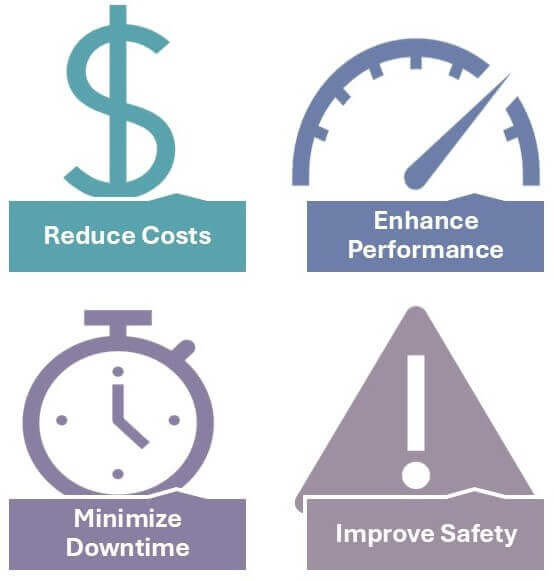
Rebuilding your baler is a cost-effective way to extend the life of your equipment while enhancing its performance and reliability. Instead of investing in a brand-new machine, a rebuild restores your baler to like-new condition, addressing worn components and upgrading critical systems to ensure optimal functionality. Our comprehensive rebuild service includes everything from stripping down the machine and inspecting all parts, to replacing worn components, updating hydraulic systems, and recalibrating the baler for maximum efficiency.
Here's a glimpse into the process we use to revive your baler and restore it to peak performance. Whether it’s a full rebuild or a more focused reconditioning and refurbishing, our services target the essential steps needed to significantly extend your baler’s operational life, ensuring it continues to serve your business reliably and efficiently.
-
Assess and Inspect
- Evaluate the Baler: Begin with a thorough assessment of the baler’s current condition. Inspect for wear and tear, cracks, corrosion, or other damage.
- Conduct a Detailed Inspection: Disassemble the baler as needed to inspect internal components such as the hydraulic system, electrical wiring, control panels, wear liners, cylinders, and structural integrity.
-
Disassemble
- Remove Components: Carefully disassemble the baler, removing parts like the platen, chamber liners, cylinders, and hydraulic components.
- Document the Process: Document the disassembly process and label parts to ensure correct reassembly.
-
Clean and Prepare Surfaces
- Clean and Degrease: Thoroughly clean all components, removing debris, old grease, and oil.
- Prepare Surfaces: Sandblast or grind surfaces to remove rust, old paint, and corrosion.
-
Repair and Replace
- Replace Worn Parts: Replace worn or damaged components, such as wear liners, blades, seals, hoses, and hydraulic cylinders.
- Recondition Components: Recondition components that are still serviceable, including the hydraulic system, motor, and control systems.
- Fabricate New Parts: Fabricate new parts if necessary, especially for older machines with hard-to-find components.
-
Reassemble
- Reassemble Components: Carefully disassemble the baler, removing parts like the platen, chamber liners, cylinders, and hydraulic components.
- Apply Correct Torque: Use correct torque settings for bolts and fittings to ensure structural integrity and safety.
-
Rebuild the Hydraulic System
- Refurbish Cylinders: Rebuild or replace hydraulic cylinders, including re-sealing and honing as needed.
- Replace Hydraulic Lines: Replace or refurbish hydraulic hoses, fittings, and valves to ensure no leaks and smooth operation.
- Replace Fluid: Drain old hydraulic fluid, flush the system, and refill with fresh, manufacturer-recommended hydraulic fluid.
-
Overhaul the Electrical System
- Replace Wiring: Replace damaged or aged wiring and electrical components.
- Update Control Panel: Upgrade or refurbish the control panel and switches for improved reliability and performance.
- Conduct Testing: Perform electrical testing to ensure the system operates safely and efficiently.
-
Repaint and Finish
- Apply New Paint: Apply a new coat of paint to the baler for corrosion protection and aesthetic appeal.
- Reapply Labels: Reapply safety labels and operational decals as per regulatory requirements.
-
Reinstall and Calibrate
- Reinstall the Baler: Reinstall the baler at its operating location, ensuring proper alignment and setup.
- Calibrate the System: Calibrate the baler’s systems, including pressure settings, cycle timing, and operational controls.
-
Test and Inspect
- Run Operational Tests: Run the baler through several cycles to test for performance, checking for leaks, noise, and efficiency.
- Conduct a Final Inspection: Conduct a final inspection to ensure all systems are functioning correctly and the baler meets safety and operational standards.
-
Document and Train
- Provide Documentation: Offer detailed documentation of the rebuild process, including a list of replaced parts and maintenance recommendations.
- Train Operators: Train operators and maintenance staff on the rebuilt baler’s features, operation, and maintenance protocols.

Rebuilding your baler is more than just a maintenance task—it's an investment in the longevity and efficiency of your operations. By revitalizing your equipment with a comprehensive rebuild, you not only save on the cost of purchasing new machinery but also enhance performance, minimize downtime, and improve safety standards. After completing our meticulous rebuild process, your baler will be restored to its prime, ensuring it operates at peak efficiency and reliability. Don't wait for breakdowns to disrupt your workflow — plan your baler rebuild and keep your operations running smoothly.